
FST BLOG
Building an Interdisciplinary Mindset: What the Space Studies Programme taught me about the future of space
- 19 January 2026
- Education, Technology
- Lauren Taylor
This past summer I had an incredible opportunity to attend the International Space University (ISU) Space Studies Programme (SSP), held in South Korea. The SSP is ISU’s flagship intensive 8‑week interdisciplinary course, held each year in a different location. It brings together professionals, graduates, and students from all over the world for a deeply immersive experience that covers every major aspect of the space sector.
As with many intensive courses, I had read many times how attendance can be hugely impactful – that participants come out changed, with a fresh perspective on life, new ideas, or even a new career path. This adds a lot of pressure; you want to make the most of the time and the opportunity. Did I want a fresh perspective, new ideas and my next career step? Yes, most definitely. But did I get that result? In a way, partially yes, but not as I was expecting.
SSP covers seven core space disciplines: engineering; sciences; human performance in space; applications; management and business; policy, economics and law; and humanities. From my degree in chemistry, I have always been drawn to astrochemistry, and from my experience working in the Space Science Programme at UKSA, I knew immediately that science discipline would be fascinating. It was, and I thoroughly enjoyed the lectures, researching exoplanets, and learning about black holes.
In particular, Dr Lýdia Štofanová gave an exciting talk: ‘From Atoms to the Cosmos.’ Dr Štofanová discussed how her work with X‑ray spectroscopy, complemented by simulations, has allowed her to study the cosmic web, preparing for future missions set out to detect gas in the cosmic web filaments (filaments filled with gas and dark matter that bind galaxies and galaxy clusters together). It was an inspiring presentation that pulled data and images from sources such as the Vera C. Rubin Observatory, James Webb Space Telescope (JWST), Hubble, and Athena – showing how many space missions are needed to obtain data and the vast range of people and skills needed to work towards understanding the Universe.
The lecture series that surprised me the most, however, was the content taught around humanities – in particular, space and the arts. One of my favourite lecturers was Dr William Kramer, who outlined that our fascination with space isn’t recent, but an age‑old interest found across many cultures, and that art and science are not separate but deeply interconnected. This understanding, he argued, is key to the success of the space sector.
It’s simple really: you can’t have a successful space mission without the creativity of the engineers designing a spacecraft that will survive the space environment, nor will you have a mission if you can’t inspire the public or investors to fund it.
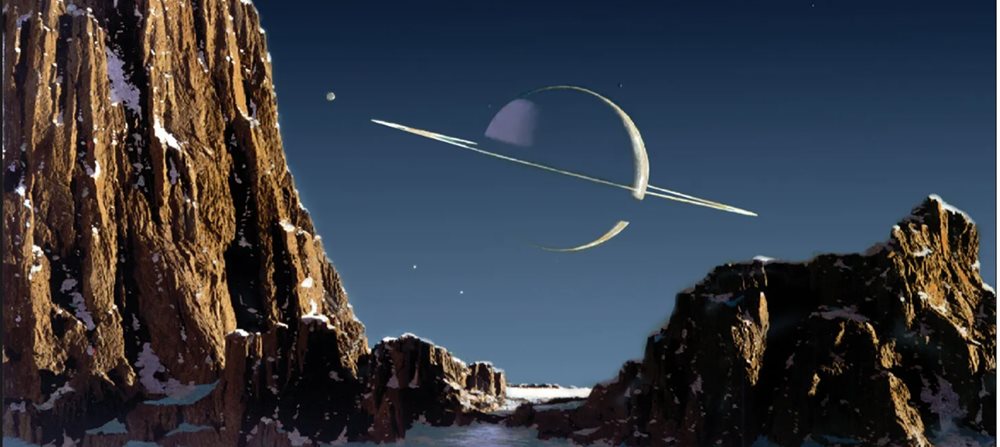
Dr Kramer emphasised the pivotal role of space art, introducing us to influential artists such as Chesley Bonestell, who helped popularise the space movement and build public support for space missions. Bonestell’s work inspired the public by creating a viewpoint of space that wasn’t distant and cold but made the viewer feel as though they were present on the planet – that this future could be achievable within their lifetime.
Over the course, the puzzle pieces came together. Educationally, I came away with a deeper understanding of the importance of space for humanity and how all disciplines interlink. Personally, I gained confidence, a deeper understanding of my strengths and weaknesses, and found a network of talented, passionate, and remarkable colleagues based all over the world.
Was I surprised by this? Again, yes and no. I learned a great deal about all the topics we covered, but instead of identifying one that I wanted to specialise in, I developed a greater appreciation for how each discipline forms a pillar that supports the success of the space sector – especially humanities, where the topic doesn’t necessarily have a clear-cut method or answer, but is equally as important as the more technical disciplines.
So, I left the course with no defined career step but with a set of newly identified strengths and a newfound way to review my work in the space sector through the lens of the seven pillars.
This resonated with me especially in my volunteer role as a Science, Technology, Engineering and Maths (STEM) Ambassador. What I hear most at conferences, in project meetings, and when networking with stakeholders is the challenge of finding and hiring talent; this is a topic discussed at the Foundation Future Leaders Programme too. There just aren’t enough people with the skills and passion needed in the space sector. I believe this challenge begins at school. Too many students don’t have the opportunity, access, encouragement, or perhaps the self‑belief that a role in the space sector is achievable for them.
It made me think about my interactions with students and the classes I often speak to. I’m proud to have had the opportunity to visit schools in the rural area where I grew up. I have always been keen to show that you don’t have to be a rocket scientist or an engineer to work in the space sector – but until the end of SSP, I didn’t truly appreciate how interlinked science and the arts were.
This led me to design a rocket‑challenge workshop aimed at students who are interested in space, but who may not see themselves as future scientists, engineers or astronauts. I emphasised that it was open to all abilities and encouraged teachers to share it with students who were creative or showed strong soft skills.
The first session was held at Winterbourne Academy, Bristol, in November 2025. The goal was simple: design, build, and land a mission. After setting the scene, the students were put into teams and I started the timer. The result? Five entirely different‑looking spacecraft that achieved the mission requirements. The main outcome for me was watching the teamwork: students who had not previously worked together were discussing ideas, challenging their failed tests, and showing real enthusiasm.
The winning team demonstrated the best balance of teamwork, creativity, and skill. In their presentation, each member outlined how they contributed to the design, how they took inspiration from one another, and how they balanced timing, budget, and quality – all key to any space mission. Their pride in their work was inspiring.
It was my first attempt at running this workshop and, though chaotic and challenging at times, the enthusiasm and energy from the students was infectious. It reminded me how much I enjoy my role and how much I appreciate the opportunities I’ve had. It highlighted how my soft skills are just as important as my technical skills, if not more so in some situations.
There are plenty of improvements to be made to the workshop, but I am excited about the opportunity to encourage more students into Science, Technology, Engineering, Art and Mathematics (STEAM) careers, and to build on my understanding that the space industry relies on a broad range of disciplines by bringing more arts and humanities elements into my workshops.
Head image: A section of Saturn as seen from Titan by Chesley Bonestell, 1944