
FST JOURNAL
Foundation Future Leaders' Conference
DOI: https://www.doi.org/10.53289/LACC1078
Barriers to innovation in science and technology
Dr Jennifer Postles and Dr Lauren Taylor
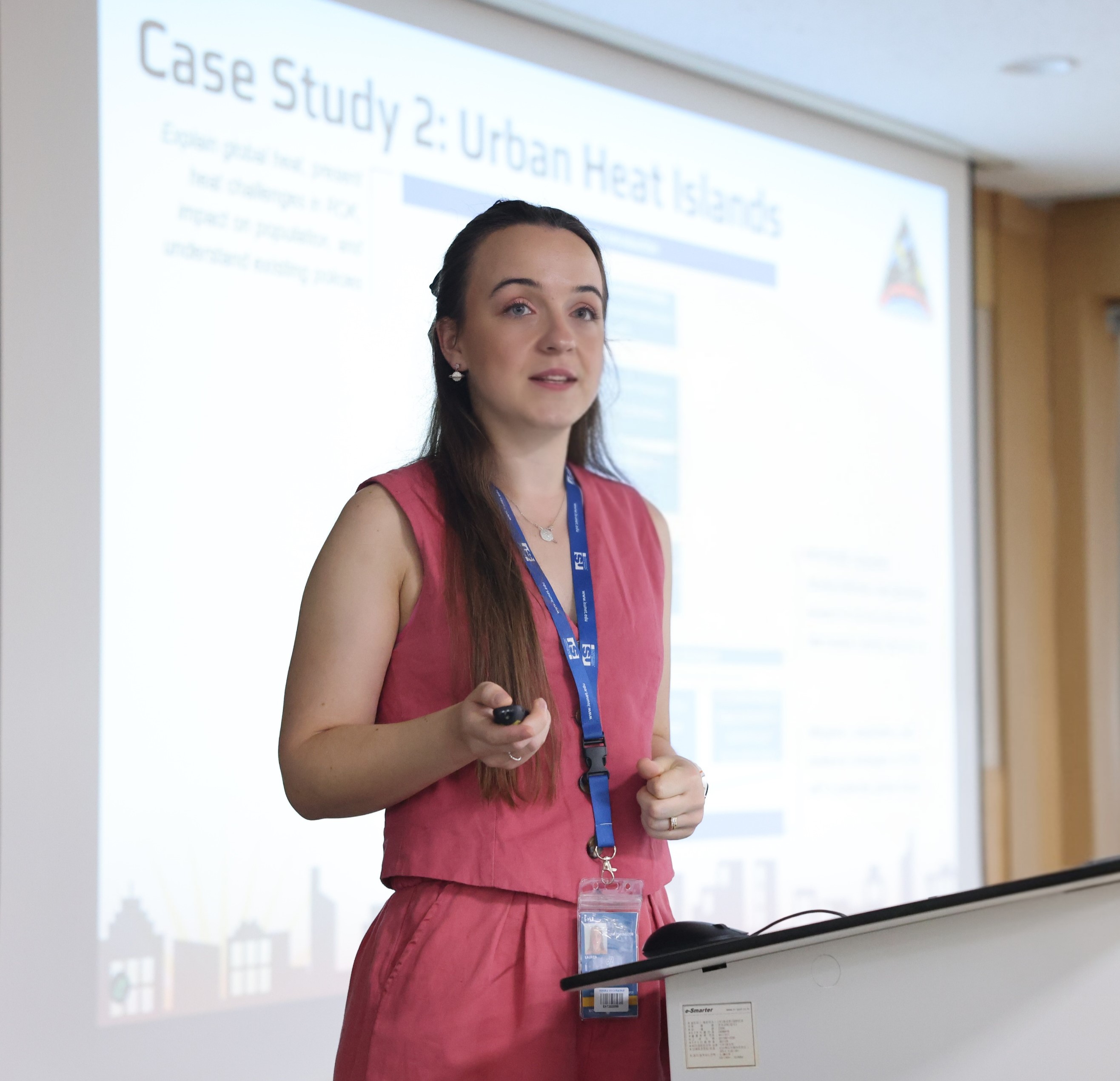
Lauren Taylor is Major Projects Lead for the National Space Innovation Programme (NSIP) at the UK Space Agency since July 2023. Jennifer Postles is Lead Specialist for Innovation Talent at Innovate UK, supporting emerging research and innovation leaders across industry and the wider R&I system.
Key themes
Funding Sustainability & System Pressures
One of the clearest concerns was the fragility of the current funding model. Universities are facing growing financial pressures: tuition fee income has been eroded by inflation, operating costs continue to rise, and international student numbers are increasingly uncertain due to changing visa policies and global instability. All of this makes it harder for institutions to stay financially stable at a time when demand for research funding is rapidly increasing.
Participants noted that success rates are falling across many major funding schemes, and short grant cycles are creating instability, especially for early‑career researchers. These problems are particularly acute in fields that depend on long-term continuity. Large programmes, like those run by the UK Space Agency, require decades of planning, cross‑government coordination and consistent investment. Even small funding gaps can undermine complex missions in areas like planetary science, climate modelling or space exploration. Several attendees remarked that typical three‑year funding cycles simply don’t match the timelines of modern scientific work.
Equity, Talent & the Future Workforce
Equity and workforce sustainability were also major themes. As one panellist highlighted, the UK research workforce still isn’t equitable: established researchers and well‑resourced institutions continue to dominate many major funding calls. This concentration of opportunity limits diversity of thought and can slow progress for underrepresented groups.
At the same time, the system is struggling to retain and develop the talent needed for a high‑growth innovation economy. There is a particular shortage of experienced leaders who can take deep‑tech companies from the lab through to scale. As a result, some spinouts and investors are increasingly recruiting senior talent from overseas. While universities are starting to adapt training and curricula to better align with industry needs, efforts remain inconsistent, and instability early in research careers continues to push skilled people out of the sector.
Science as Soft Power & International Collaboration
The discussion also highlighted that science delivers value far beyond economic outcomes. Science acts as a form of soft power, helping the UK build partnerships, influence and long‑term diplomatic relationships. Participants saw an opportunity for the UK to develop deeper collaborations with emerging science nations, aligning capacity‑building with areas where the UK has strategic strengths.
However, there was concern that the UK’s reputation as an open and welcoming place to study and work has weakened in recent years. Restrictive immigration policies and mixed messages to international students were highlighted as key factors. Rebuilding confidence will be essential if the UK wants to attract global talent and remain a trusted partner in international research.
Despite the challenges, the session closed on an optimistic note. The UK continues to produce exceptional research that delivers impact far beyond what might be expected from its level of investment. Recent moves, such as increasing ARIA’s budget and UKRI’s renewed focus on growth, suggest a shift toward a more deliberate national strategy for supporting high‑risk, high‑reward research.
Recommendations for stakeholders
Three priorities stood out as essential for unlocking the UK’s full potential:
- Create a more stable, long‑term funding environment that can support ambitious, sustained programmes of research.
- Build a more equitable, supportive system with better pathways for diverse talent and more sustainable research careers.
- Use the UK’s scientific excellence more strategically, both domestically and internationally, with clearer priorities and stronger partnerships.
While the challenges are real, the session identified practical steps forward: expanding participation through targeted schemes, deepening international ties through science diplomacy, and tackling structural barriers to entrepreneurship. Taken together, these changes offer a credible path toward a research and innovation system that is more equitable, globally connected and ready for the future.