
FST BLOG
Why Extended Producer Responsibility must not become another missed opportunity for flexible plastics recycling
- 4 May 2026
- Business, Environment
- Elliot Hyams
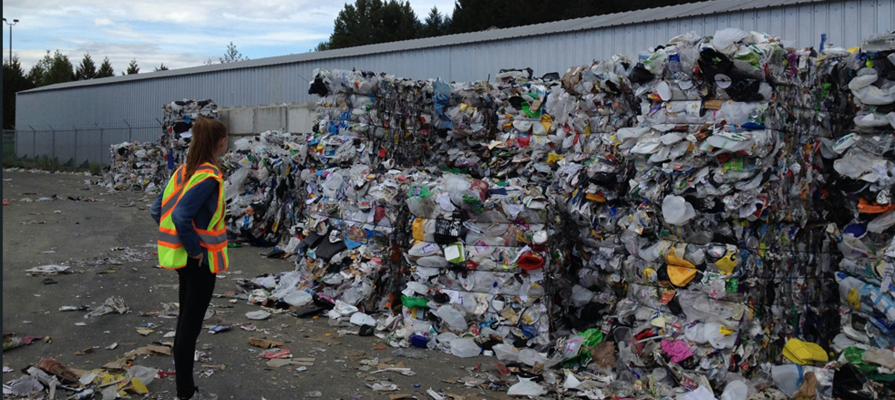
Flexible plastic packaging has always been a difficult part of the recycling debate. It is lightweight, efficient and very good at protecting products, but once it becomes waste, the economics are far less attractive.
This is the fundamental issue that packaging Extended Producer Responsibility, or pEPR, now needs to address. If the system simply raises money from producers without ensuring that difficult materials are actually collected, sorted and recycled, then it risks becoming another levy rather than a solution.
Flexible packaging is not a niche problem. It includes plastic bags, wrappers, pouches, sachets, lidding films and many of the formats used across food, pet food, personal care, household goods and medical products. A recent multi-year UK trial, led by SUEZ, RECOUP and WRAP on behalf of the Flexible Plastic Fund, estimated that 1.7 million tonnes of flexible plastic packaging are placed on the UK market each year. Kerbside collection is now being mandated from 2027, with pEPR payments intended to provide the funding mechanism for councils to roll out this service.
This is clearly positive, but collection is not the same as recycling.
For flexible packaging to be recycled in practice, there needs to be a commercial reason for recyclers to handle it. At the moment this is where the system is still fragile. The collection trial also found that end-market gate fees ranged from £80 to £1,000 per tonne, with £650 per tonne the most commonly paid gate fee. The report also modelled a total service cost of £1,671 per tonne when collection, sorting and end markets were included [i].
That is not a trivial cost. Flexible plastics are lightweight, variable and often low value. Rigid plastics are generally easier to sort, easier to handle and have more established markets. It would therefore be entirely predictable for recyclers and waste operators to focus on the materials that already produce a better financial return for them.
This is why pEPR needs clear guardrails.
If fees raised on low value flexible packaging are simply absorbed into general recycling budgets, there is a risk that the money will support higher-value material recycling instead. That may improve recycling figures on paper, but it will not improve the circularity of flexible plastics. The whole point of pEPR should be to make the difficult parts of the system economically viable: collection, optical sorting, film capture, washing, pelletising, chemical recycling where appropriate, and the development of end markets for recycled flexible PE and PP.
Another tax called The Plastic Packaging Tax (PPT) has not been used correctly, so calling out this potential problem isn’t without merit. The tax was initially designed to encourage the use of recycled content by taxing plastic packaging that contains less than 30% recycled material, and it was anticipated that the funds would be used to fund the collection and recycling infrastructure required for flexible plastics. Unfortunately, this never happened and the tax simply raised funds for the Treasury.
It’s encouraging to see that the packaging industry has at least started to move in the right direction. Companies are increasingly moving away from complex mixed laminates and towards mono-material polyolefin structures, particularly mono-PE and mono-PP where suitable.
CEFLEX, the European circular economy consortium for flexible packaging, has produced design guidance based on more than 600 samples across 55 materials and over 1,760 sortability and mechanical recyclability data points [ii]. Its guidance encourages redesign towards mono-PE and mono-PP where possible, because this improves sortability, recyclability and material value.
Material innovation is helping too. Machine Direction Oriented polyethylene, or MDO-PE, is allowing PE films to achieve some of the stiffness, clarity and handling properties that previously required less recyclable mixed laminates. The market is responding to this shift, with forecasts showing continued growth in MDO-PE films as brands and converters move towards recyclable mono-material packaging [iii].
There is also emerging practical evidence at pack level that things are moving in the right direction. Recent pouch recyclability testing at Sherbourne Recycling, showed that PE-based pouches could be correctly identified and sorted through a modern materials recovery facility (MRF) [iv]. This is important because the debate is now moving from whether flexible packaging can be designed for recyclability, to whether those designs can move through real UK infrastructure.
So, what is the point of making flexible packaging more recyclable if it does not get recycled yet?
The flexible packaging industry has made progress on designing for recyclability and sortability has now been proven. With kerbside collection for flexibles being implemented next year by local authorities, the natural next step is ensuring that the material is actually recycled by the recyclers.
If pEPR is used to help fund the gap between low-value flexible waste and commercially viable recycling, we may be on the cusp of finally solving the plastic waste issue. Let’s hope that government, local authorities, recyclers and producer responsibility schemes now make sure the economics work in practice.
References
[i] The Future of Recycling Flexible Plastic Packaging in the UK: FlexCollect Project Final Report and Blueprint (Flexible Plastic Fund / SUEZ, September 2025).
[ii] Designing for a Circular Economy: Recyclability of Polyolefin-Based Household Flexible Packaging (CEFLEX, September 2025).
[iii] MDO-PE Films Market Report (Future Market Insights).
[iv] “Are pouches actually recyclable in 2026?” (SPS Pouches, 2026).
Elliot Hyams is Director and Sustainability Lead at SPS Pouches, a UK supplier of custom printed flexible packaging. He sits on the British Plastics Federation’s Technical and Sustainability Committees and works with SMEs and growing brands to improve packaging sustainability outcomes without compromising on functionality.
Photo by Vivianne Le May via Unsplash